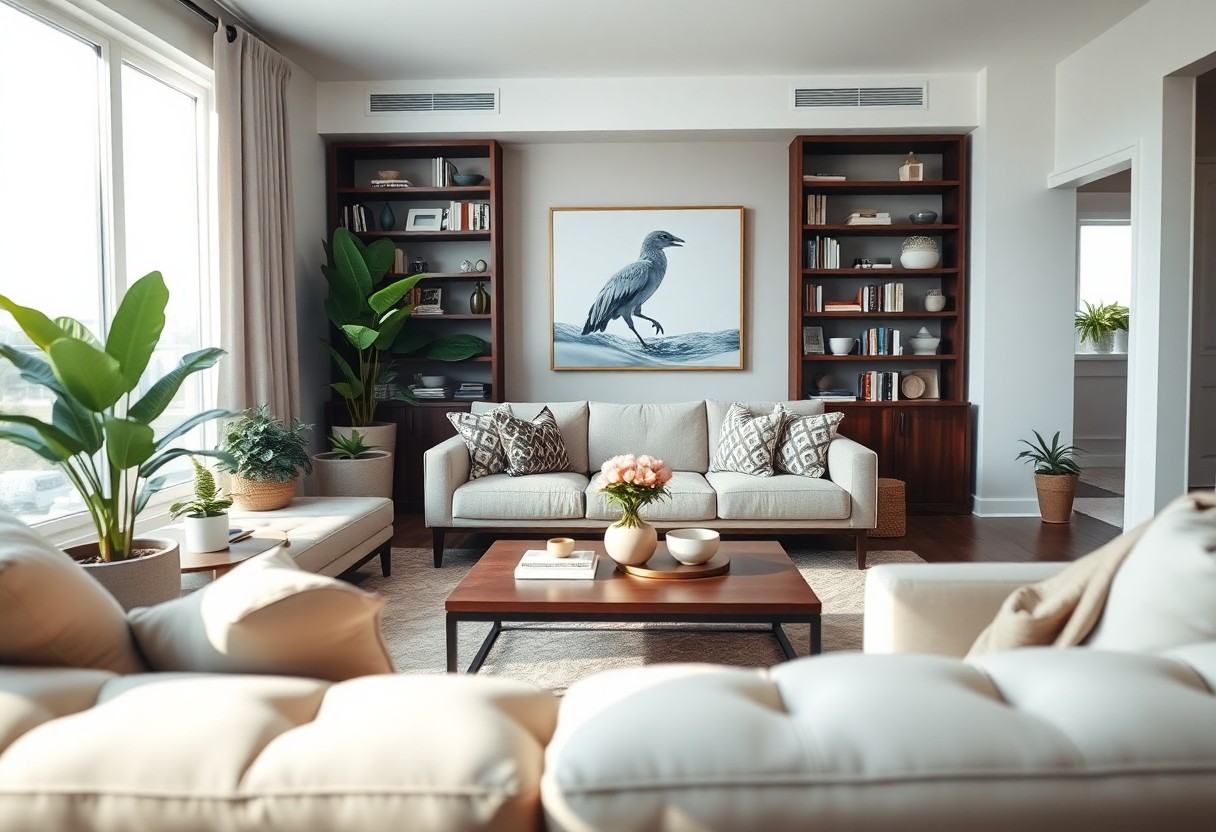
The home staging tips that make the most difference are mostly cheap: clear out, clean, fix the small snags, give every room an obvious use, let the light in and make the approach to the front door look cared for. Government guidance for sellers says that investing "a little time and money" before viewings "could improve your chances of selling at a better price". Staging will not rescue an unrealistic asking price, though, and it must never be used to hide a defect.
This guide brings the practical side together for sellers in England: what to do first, room by room, outside, for the photographs and before each viewing, plus empty homes, the seasons and older Cambridge properties. For why first impressions shape a buyer's decision, see our guide to what buyers really notice when they view a home.
Staging is preparing and arranging your home so that buyers can picture themselves living in it. In practice that means less clutter, clean surfaces, furniture placed to show off the space and the way rooms connect, and a few finishing touches. Most sellers do it themselves with what they already own. A professional stager can advise on layout or supply hired furniture and accessories, which is covered further down.
Staging is easier if you do it in a sensible order, ideally a few weeks before photographs are taken.
Go room by room rather than trying to tackle the whole house at once. Sort things into three groups: what you will pack now because you will not need it before the move, what you need day to day, and what is going to charity, sale or the tip. Packed boxes are better stored in a garage, with friends or in a storage unit than stacked in a spare room.
This is the first room buyers see, so clear the coats, shoes, bags and post, make sure the door opens fully, and put a clean mat down. A lamp or a working overhead light makes a narrow hall far more welcoming.
Arrange the seating around a focal point, such as a fireplace, a window or the view to the garden, and keep clear routes through the room. Hide cables, tidy away games consoles and remotes, and add a lamp to any dark corner.
Clear the worktops apart from one or two useful items, clean the hob, oven and extractor, and empty the bins before every viewing. Replacing tired cupboard handles or stained sealant is a cheap improvement. If the dining area doubles as a dumping ground, clear it and set out a table and chairs so buyers can see that a table fits.
Make the beds with fresh, plain bedding and clear the floor, the tops of wardrobes and the space under the beds. Government guidance suggests it "can be helpful to have a bed in the smallest bedroom in order to reassure viewers that a bed will fit." If a small bedroom has been used as a store room, give it a single clear purpose again.
Clean the grout and glass, replace any discoloured sealant, put out fresh towels and put most toiletries away. Check that the extractor fan works and that taps and the toilet do not drip or run.
If you have a desk in a bedroom or a box room, keep it tidy and show the room as either an office or a bedroom, not both at once.
Light, neutral walls help photographs look brighter and let buyers think about the space rather than your taste. Use colour through cushions, a throw or flowers that you can take with you.
For lighting, replace every blown bulb and use bulbs of the same colour within a room so it does not look patchy. Clean lampshades and light fittings, and use table and floor lamps to lift darker corners. If you are changing a wired-in light fitting, bear in mind that the Building Regulations guidance on electrical safety says even work that does not need notifying, such as replacements, should be installed, inspected and tested to the wiring standard BS 7671, so use a registered electrician unless you are competent to do it.
Government guidance says that, whoever shows the property, it is important that it "looks and smells clean, tidy and welcoming". Air the house before viewings and deal with the cause of any smell, such as pets, damp, drains or cooking, rather than covering it with strong fragrance.
Sweep the path, tidy or hide the bins, clean the front door and windows, and replace a tired door number or outside light. Our guide to creating a great first impression with kerb appeal covers the front of the house in more detail.
At the back, treat the garden as another room. Mow and edge the lawn, weed the borders, clear the patio, put away children's toys and garden tools, and set out a table and chairs if you have them. A few planted pots by the back door add colour quickly.
This catches out sellers in and around Cambridge. Cambridge City Council has 18 conservation areas and South Cambridgeshire District Council has 85, and Greater Cambridge Shared Planning says all trees in conservation areas are protected by general conservation area controls. Before work such as "trimming, topping, uprooting or lopping branches" on a tree in a conservation area, you must normally give the council six weeks' written notice, and the work can go ahead after that unless the council protects the tree with a tree preservation order. Trees with a trunk no more than 75 millimetres across, measured 1.5 metres above the ground, are exempt. A tree under a preservation order needs the council's consent, which Greater Cambridge Shared Planning says it decides within eight weeks. Either way, check well before the photographs if a tree is shading the house or the garden.
If your home has original features such as fireplaces, cornicing, sash windows or panelled doors, show them off: clean them, light them and keep furniture away from them. Be careful about "modernising" for a sale. Greater Cambridge Shared Planning explains that all of a listed building is listed, including its interior and objects fixed to it, that listed building consent is needed for any work affecting its character, inside or out, and that it is a criminal offence to carry out unauthorised work. In a conservation area, the councils also note that replacing windows or doors in a flat needs full planning permission. Our guide to what it means if a building is listed explains more.
Many buyers will see your home online before they visit, so the photographs need the house at its best. Government guidance says photographs "should make the property look as bright, spacious and welcoming as possible". On the day, open every curtain and blind, turn the lights on, move cars off the drive, hide bins, put toilet seats down and clear every surface you can. Our guide to preparing your home for professional photography has a fuller checklist.
Afterwards, government guidance suggests asking your agent to collect feedback from viewings so you can put problems right or adjust the price. If viewings are not turning into offers, it also suggests asking a friend to do a mock viewing and to be honest about what could improve.
Empty rooms are harder for buyers to judge, because there is nothing to show their scale. Government guidance notes that "buyers can find it hard to visualise the potential in empty rooms" and suggests putting a single bed in the second bedroom or a table in the dining room. Leaving a few pieces of furniture, or hiring some, helps the photographs as much as the viewings.
Look after the property while it stands empty. GOV.UK guidance on selling an inherited home that stands empty suggests putting the heating on in winter to prevent damp. Many home insurance policies restrict cover, for example for theft, malicious damage and escape of water, once a home has been unoccupied for a set period, usually 30 or 60 days, so check your policy and tell your insurer before the house is left empty.
Make the most of long days by booking photographs in good light and trimming back anything shading the windows. Keep the garden mown, watered and weeded, as it can grow out of shape within a couple of weeks. On hot days, keep rooms cool and aired, use lighter bedding and throws, and close blinds on the sunny side between viewings.
Turn lights on early, as it can be dark before the end of the working day, and keep the house warm. Clear leaves from paths and the front step, put a mat inside the door for wet shoes, and keep gutters and drains clear where you can do so safely. If you have a fireplace or wood burner, a clean, laid fire shows it off well.
Most homes do not need one. Decluttering, cleaning and fixing snags do most of the work, and your estate agent should be able to tell you what to change before the photographs. A stager can help if a home is empty, if you have moved out and left a few awkward pieces behind, or if you simply do not have the time.
If you use one, ask for a written quote that sets out exactly what is included, how long any hired furniture stays and what happens if the sale takes longer, and who insures hired items while they are in your home. Ask to see photographs of homes they have staged and talk to your agent before you commit.
Government guidance is clear: "While you want to present your home in the best possible light, you should not mislead potential buyers by covering up any defects; for example by painting over damp patches." It adds that problems are likely to come up in the buyer's survey anyway, leading to "avoidable price negotiations". The guidance gives sellers three better options for a known problem:
Tell your agent about anything material, such as a history of flooding. Under the Digital Markets, Competition and Consumers Act 2024, an estate agent must not give misleading information or leave out material information (information the average consumer needs to take an informed decision) where that is likely to change the decision a buyer would make. There is no general duty on a seller to volunteer every defect, but the answers you give on the Law Society's Property Information Form (TA6) must be truthful, complete and as accurate as you can make them, and if you do not know an answer you must say so. If you give misleading information, the buyer may be able to claim compensation after completion. Deliberately concealing a fact relevant to a claim means the time limit for that claim does not start until the buyer discovers it, or could reasonably have done so. Our guide to how long you are liable after selling a house explains the time limits.
Good presentation brings buyers through the door, but the price decides whether they make an offer. Government guidance suggests asking three agents to value your home and asking each for evidence, such as similar homes they have recently sold. If you are selling in or around Cambridge, you can request a free valuation and ask us what to prioritise before the photographs.
This article is general information, not legal advice. Speak to a solicitor or licensed conveyancer about your own circumstances.
Government guidance says a little time and money spent before viewings could improve your chances of selling at a better price. We do not quote a figure for how much faster or higher, because the percentages often repeated online are not backed by UK evidence we have been able to verify.
Declutter, deep clean, fix the small snags, touch up scuffed paintwork, replace blown bulbs and tidy the front garden. Most of that costs time rather than money and makes the biggest difference to photographs and viewings.
It usually helps. Government guidance notes that buyers find it hard to picture empty rooms and suggests a single bed in the second bedroom or a table in the dining room. Check your insurance too, as many policies restrict cover once a home has been unoccupied for a set period, usually 30 or 60 days.
Most sellers do not need one. A stager can help with an empty home or if you are short of time. Get a written quote covering what is included, how long hired furniture stays and who insures it.
Not to hide them. Government guidance tells sellers not to mislead buyers by covering up defects, such as painting over damp patches. Fix the cause, get it assessed and share the cost, or price it in, and answer your TA6 truthfully.
Open the curtains, turn on lamps, air the rooms, wash up, empty the bins, take pets out if you can, put valuables away and make sure the loft, garage and garden can be reached.