The improvements most likely to add value to a house are the ones that fix problems and make it look cared for: repairs, fresh decoration, a tidy exterior, and a kitchen or bathroom that is refreshed rather than replaced. They are affordable and they help a home compete with others for sale nearby. Bigger projects that add usable space, such as an extension or a loft conversion, have more potential, but they cost far more, usually need building regulations approval and sometimes planning permission, and only pay off if the finished house is still in line with what buyers pay on your street.
Be wary of claims that a particular project "adds 10%" or "adds 20%" to a home's value. We have not found an authoritative, up-to-date UK source that measures what individual improvements add to a sale price, so this guide does not quote any. For your own home, the best evidence is what similar homes nearby have sold for.
Most streets have a rough ceiling: the most buyers will pay for a house of that type and size in that location. Work that brings a home up to the standard of similar homes nearby is more likely to be reflected in the price than work that pushes it well beyond them, and no improvement turns a house into a different location.
For context, HM Land Registry's UK House Price Index put the average price in the Cambridge City Council area at £475,151 in July 2026, unchanged on a year earlier. The averages by type were £298,575 for flats and maisonettes, £493,851 for terraced houses, £603,225 for semi-detached houses and £979,438 for detached houses.
Before committing to a large project, find out what the house is worth now and what similar homes with the extra space have sold for. A valuation from a local agent is a sensible first step. If you are selling soon, some jobs are not worth doing at all, and our guide to what not to fix when selling a house covers where to save your money.
Buyers notice unfinished jobs, and each one raises the question of what else might be wrong. A buyer's surveyor will also report on condition, and defects in the report can become points for renegotiation. Start with the small things:
Some problems need a professional opinion rather than a quick fix. If you have noticed wide or diagonal cracks, doors that have started to stick or floors that slope, read our guide to the signs of structural problems in a house before you put it on the market.
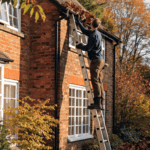
The outside of the house is the first thing buyers see, both in the online photos and when they arrive for a viewing. Most kerb appeal work is cheap:
Repainting an outside wall that is already painted does not normally need planning permission. Greater Cambridge Shared Planning, which handles planning for both Cambridge City Council and South Cambridgeshire District Council, notes the exception where an Article 4 direction covers repainting. In a conservation area, cladding any part of the outside of a house with stone, render, pebble dash, timber, plastic or tiles needs planning permission.
Since 1 April 2002, building regulations have applied to all replacement glazing, and an external window or door is a "controlled fitting". The simplest route is an installer registered with a competent person scheme, who can certify that the work complies and give you a certificate when it is finished. If you use an unregistered installer or do it yourself, you need approval from a building control body instead. Keep the certificate, because the buyer's solicitor will ask for it. Replacement windows should give at least the same means of escape in a fire as the ones they replace. In a conservation area, Greater Cambridge Shared Planning says replacing windows or doors on a house is permitted development if the new ones are very similar to the existing, but replacing them on a flat needs full planning permission.
You do not need planning permission for a new or replacement driveway of any size if it uses a permeable surface such as gravel, permeable block paving or porous asphalt, or if rainwater runs off to a lawn or border. Covering more than five square metres of a front garden with a traditional impermeable surface that drains to the road does need permission. If you want to drive across the pavement to reach the drive, you need a dropped kerb, which means applying to the local authority. A new wall, fence or gate needs planning permission if it is over one metre high next to a road used by vehicles (or its footpath), or over two metres high elsewhere, in or outside a conservation area.
Knocking rooms together to create open-plan space is a bigger job. Planning Portal guidance says building regulations will normally apply if you remove an internal wall or form an opening in one, and if the wall is load-bearing, the support that replaces it has to carry the loads above down to the foundations, so ask a structural engineer to design it.
Kitchens and bathrooms get close attention at viewings, but you rarely need to rip them out. A full refit is a large spend that you may not get back on a sale, and many buyers would rather choose their own. Cosmetic work usually goes further:
GOV.UK lists installing a bathroom that involves plumbing, and changing electrics near a bath or shower, among the jobs that may need building regulations approval. For electrical work in England, the Planning Portal says notifiable jobs include fitting a new consumer unit or fuse box, adding a complete new circuit, and altering existing circuits in the space around a bath or shower. Use an electrician registered with a competent person scheme, who can self-certify the work, and keep the certificate: the TA6 asks sellers about electrical work and certificates.
You must have an Energy Performance Certificate (EPC) when you sell, and GOV.UK says you must order one before you market the property. The EPC rates a home from A (best) to G (worst), is valid for 10 years and lists recommended improvements, so it is a useful starting point. You can check whether your home already has a valid EPC, and download it free, through the government's find an energy certificate service. If you have made big improvements since it was issued, a new EPC will show buyers the current rating.
The cheaper energy improvements are usually topping up loft insulation, draught-proofing doors, windows and loft hatches, adding heating controls and switching to LED bulbs. Larger ones include cavity or solid wall insulation, new glazing, a heat pump and solar panels. Our guide to energy-efficient homes for buyers and sellers sets out what these cost and save, the grants available and the 0% VAT rate on many energy-saving materials until 31 March 2027.
The most quoted evidence is a study for the Department of Energy and Climate Change, published in June 2013, which analysed repeat sales of 325,950 homes in England between 1995 and 2011. Compared with homes rated G, it estimated that homes rated A or B sold for about 14% more per square metre, C for about 10% more, D for 8% more and E or F for about 6% more. The premium was considerably smaller in the East of England, at about 7% for A or B against G, and the authors described energy efficiency as "undoubtedly a weaker determinant" of price than size, location and type of home. The data is now more than a decade old, so treat it as evidence that efficiency can help, not as a figure for your house.
An extra bedroom, a second bathroom or a larger kitchen changes what a house offers, so these projects have the most potential. They also involve three separate sets of rules: planning permission, building regulations and the Party Wall etc. Act 1996. Meeting one does not remove the need to meet the others.
Many extensions to houses in England can be built without a planning application under permitted development rights, as long as they stay within set limits. These rights do not apply to flats and maisonettes, they can be removed by a planning condition or an Article 4 direction, and the limits count any earlier extensions to the "original house" (the house as first built, or as it stood on 1 July 1948 if older). The main limits are:
Cambridge City Council has 18 conservation areas and South Cambridgeshire District Council has 85, and the rules in them are tighter. Conservation areas count as designated land, so side extensions and rear extensions of more than one storey need planning permission, and the loft conversion rights above do not apply. Greater Cambridge Shared Planning adds that dormer windows on any roof slope and new basements need planning permission. If a house is listed, listed building consent may be needed for work inside as well as outside, and doing that work without consent is a criminal offence. You can check whether a property is in a conservation area on the Greater Cambridge Shared Planning map, which covers both Cambridge and South Cambridgeshire.
If you are not sure a project is permitted development, you can apply to the council for a lawful development certificate. Once granted for a proposed development, work carried out in line with it is presumed lawful unless something material changes before it starts, and the certificate is useful evidence for a buyer when you come to sell. It covers planning only, not building regulations.
Most extensions need approval, converting a loft into liveable space needs it, and converting a garage into habitable space normally needs it. A conservatory is normally exempt if it is single storey, at ground level, under 30 square metres, separated from the house by external quality walls, doors or windows, has an independent heating system with its own controls, and its glazing and any fixed electrics comply with the regulations, but any new structural opening between it and the house still needs approval. A detached garden building with no sleeping accommodation does not normally need approval if it is under 15 square metres, or under 30 square metres and either at least one metre from any boundary or built substantially of non-combustible materials.
You can use your council's building control service or a registered building control approver. GOV.UK warns that the person doing the work can be prosecuted and fined for not complying, that you could be made to pay to fix faulty work, and that without approval you will not have the certificates you may need when you sell.
In England and Wales, you must tell your neighbours before certain building work on or near a shared wall or boundary. Common examples are cutting into a party wall to take the bearing of a beam (often needed for a loft conversion), raising or underpinning a party wall and cutting off a chimney breast. Garden walls can be party walls, but wooden fences are not.
A notice lapses if the work has not started within 12 months of it being served. If a neighbour receiving notice of work to a party wall or an excavation does not consent in writing within 14 days, a dispute is treated as having arisen, and one agreed surveyor, or a surveyor for each owner, draws up a party wall award. The person doing the work usually pays the surveyors' fees where the work is solely for their benefit. The Act does not settle disputes about where a boundary is.
The TA6 form asks sellers about alterations, planning permission, building regulations approvals and competent person certificates, and the Law Society's notes tell sellers to give their solicitor copies. Missing paperwork can hold up a sale. In England, the council generally has ten years from substantial completion to take enforcement action against building work done without planning permission where the work was completed on or after 25 April 2024; for work completed before that date the limit is four years. Separately, building control can require work that breaks the building regulations to be altered or removed for up to ten years after it was completed. The Law Society also notes that where alterations have been made since a home was last valued for council tax, a sale may trigger a revaluation into a higher band.
This article is general information, not planning, legal or tax advice. Check with your local planning authority (in Cambridge and South Cambridgeshire, Greater Cambridge Shared Planning), a building control body and a solicitor or licensed conveyancer about your own property.
There is no reliable UK figure for any single improvement. Adding usable space, such as an extra bedroom or bathroom, has the most potential but costs the most and needs approvals. For a sale, repairs, decoration and kerb appeal are the cheapest ways to help a home compete.
Fix small faults, redecorate in neutral colours, declutter, improve the lighting, tidy the front garden and refresh the kitchen and bathroom with new handles, taps, grout and sealant rather than replacing them.
Usually not. A full refit is a large cost you may not recover, and many buyers want to choose their own. Painting or refacing cupboards, new handles and a new worktop or tap are cheaper ways to improve it.
Often not for a house, as long as the extra space is within 40 cubic metres for a terrace or 50 cubic metres for other houses and other limits are met. Permitted development does not apply to flats or in conservation areas. You will need building regulations approval either way.
If the work involves a party wall, such as inserting a beam for a loft conversion, or digging foundations close to a neighbour's building, you must serve notice under the Party Wall etc. Act 1996: two months for work to the wall and one month for excavation.
A 2013 government-commissioned study found homes rated A or B sold for about 14% more per square metre than G-rated homes, but only about 7% in the East of England, and its data ends in 2011.